Sunday, June 23, 2024

Zimbabwe - Beautiful doves, rollers and starlings from the savannah

 115. Cape (Glossy) Starling


116. Red-winged starling 


117. European roller

 
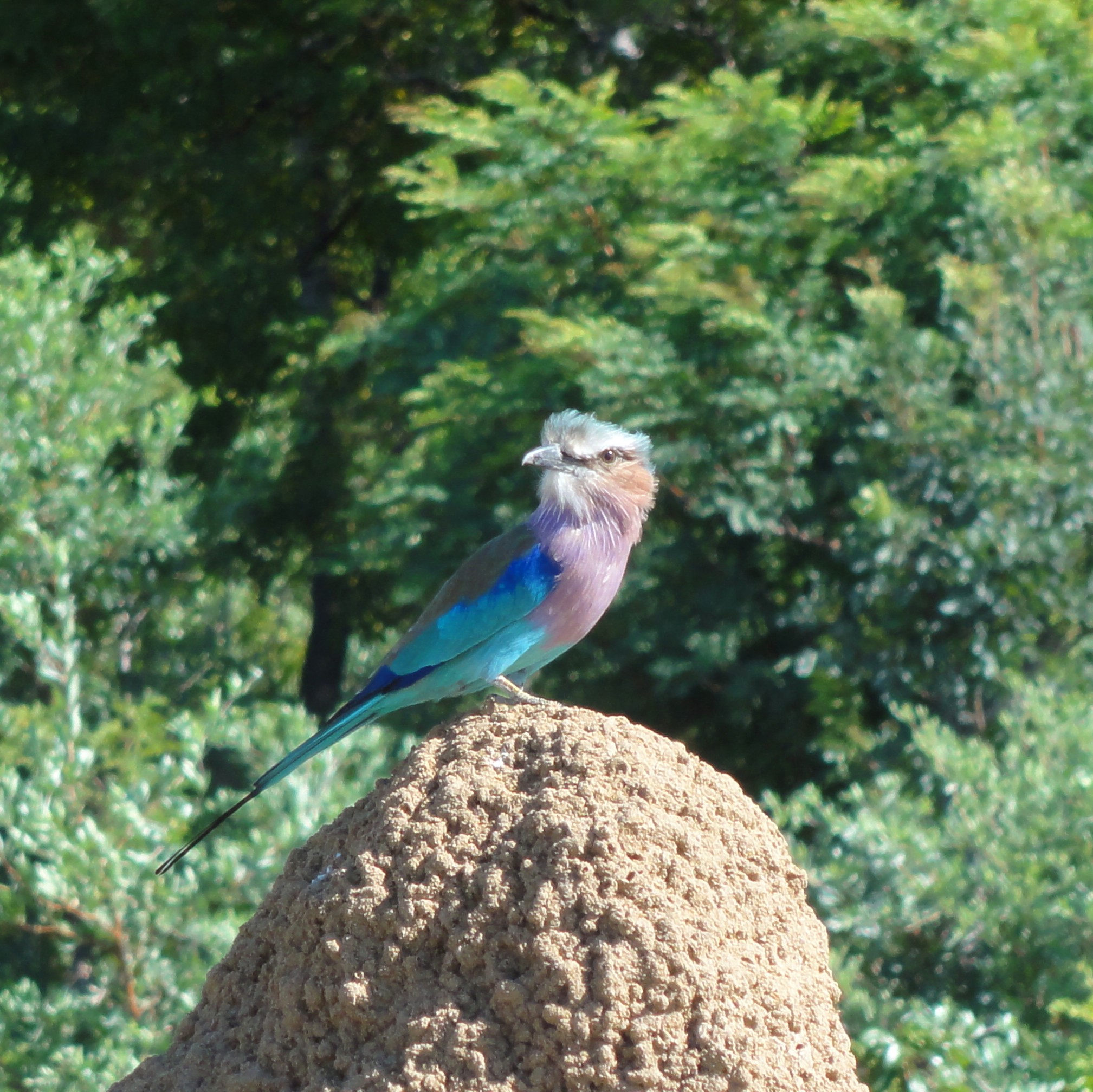
118. Lilac-breasted roller 
 
 
119. Purple roller


120. Laughing dove

A beautiful exotic dove that was purely captured.
 
 
April 2024, Zimbabwe


Zimbabwe - Vultures and storks

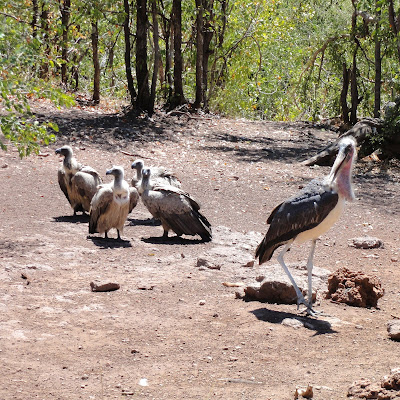
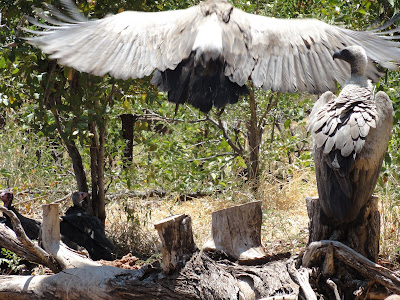
Hooded vultures, White-backed vultures and Marabou storks near Victoria Falls


110. Hooded Vulture

Bare-skinned face that is white or scarlet when agitated because of high temperature.


111. White-backed vulture 

The most common vulture in the savannah. Usually blackish face and neck, with the rest of the body varying from brown to buff to streaked. 


112. Marabou stork
 
A.k.a. the "undertaker bird", is a naked headed stork that competes the vultures at carcasses. They eat anything from termites, flamingos and other birds, and mammals of all sizes to human waste. Their face becomes scarlet when agitated, because of high temperature and this is how they kill bacteria inside their body. There exist very nice facts about why it is has been widely considered as one of the dirtiest and ugliest birds.


113. African Openbill

In the family of storks, a smaller bird, with a characteristic, wide, nutcracker-like gap between the mandibles.


114. Abdim's stork
 
Breeds in central Africa, but is a common migrant to the south. Red face when breeding and agitated.


 April 2024, Zimbabwe


Zimbabwe - Egrets, Herons, Darters and Ibises

 103. African Darter

When fishing, sometimes, only the long neck and head are visible, a.k.a "snakebird"

 
 104. African Sacred Ibis


 (along with white-faced whistling ducks)
 
 
105. Glossy Ibis
 
Dark glossy green with bronze highlights, looks black from a distance. 

 
106. Grey Heron


107. Western Cattle Egret

 
Western cattle egrets hanging out with rhinos at Lake Chivero


108. Little Egret
 
In contrast with the Western Cattle Egret, the Little Egret lacks yellow lores (it has darker lores that extend to the bill), has a black bill and black legs. Also, although it is little as well, it is larger than the Western Cattle and has a longer bill.

Little egret hanging out with (bonus!) Hamerkop


109. Hamerkop
 
Monotypic family of birds that are related to pelicans and can be found only in Africa and Madagascar. It has a characteristic hammer-shaped head, that sometimes is not easily distinguished, when the head is retracted. 


April 2024, Zimbabwe

Saturday, March 16, 2019

Dublin birds

102. Brant (or Brent) Goose

Small goose that winters in beaches, sheltered bays, salt marshes and rocky coasts.


101. Great Shag (or Shag)

A great diver! Breeds on rocky coasts of west and south Europe, southwest Asia and North Africa.

Its scientific name Phalacrocorax aristotelis comes from 'phalacros' and 'corax', which mean 'bold' 'raven' in greek. Name aristotelis is given to commemorate the greek philosopher.


 A Great Black Cormorant for comparison. Also, an older one here.


100. Rook

Belongs to Corvus, the same family that Crows and Ravens belong to. It is a very sociable and intelligent bird.


99. Pied Wagtail

It is maybe more accurate to be counted as a subspecies of the White Wagtail (no69). Pied Wagtail is White Wagtail's darker relative that breeds in Ireland and the UK. In the winter it migrates south. It is very playful and constantly wags its tail thats why its modern greek name (Λευκοσουσουράδα/Σουσουράδα) is synonym to a "playful girl".


Also, spotted again:

European Robin


The widely distributed across Eurasia Hooded Crow and first bird in my countdown list. Locally it is known as Scotch Crow, Danish Crow, Mist Crow (in Germany) and in Ireland it is called caróg liath or grey crow.

It is different from place to place. The ones spotted in Moscow were huge, while the ones in Greece and Egypt are smaller and brighter/whiter.


Mute Swans with amazingly thick necks!


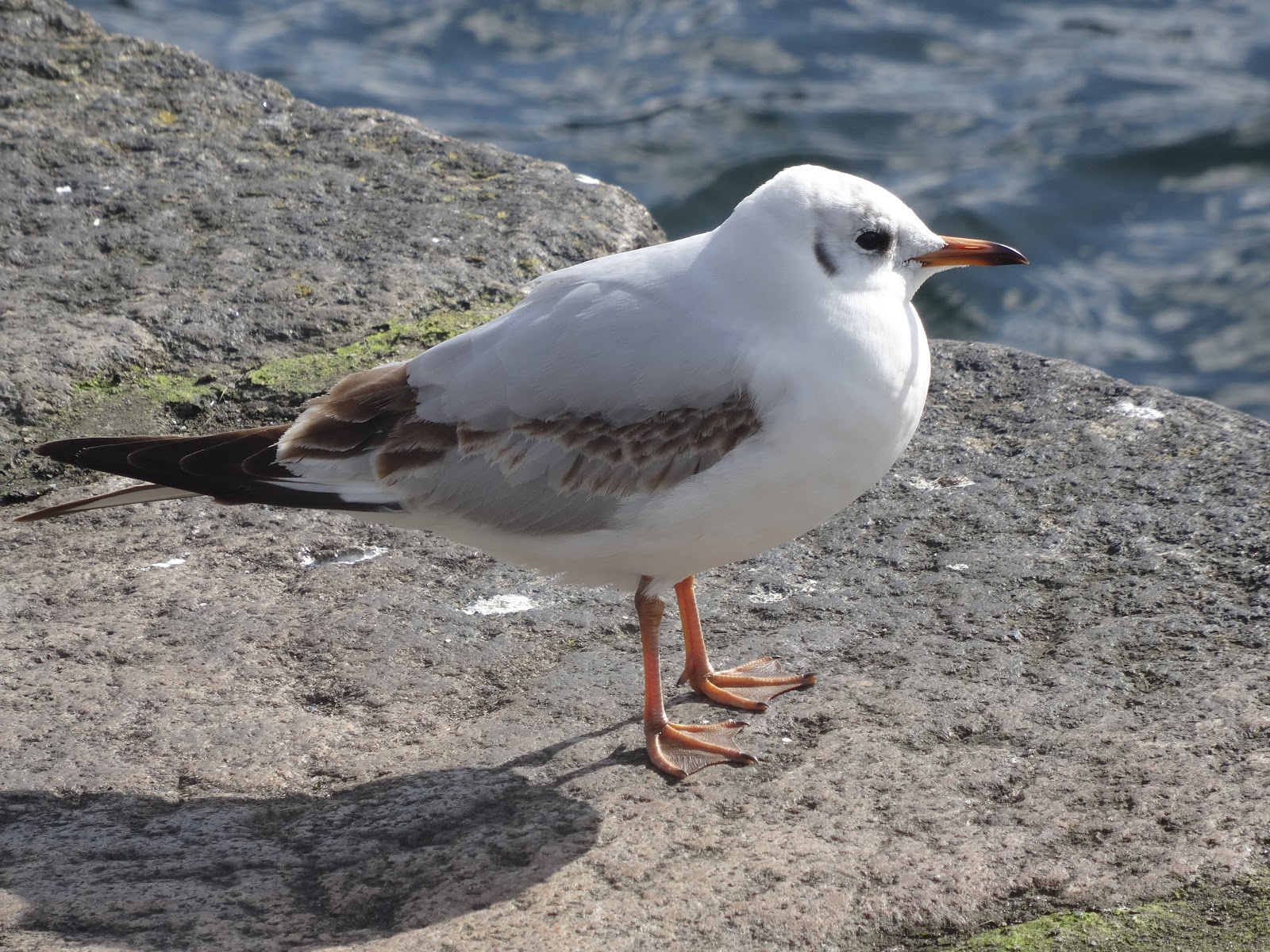
Juvenile Black-headed gull (notice that they do not show a full black hood yet)


And baby Herring gulls !