Saturday, March 16, 2019

Hoyo de Manzanares

Birds spotted recently in Hoyo de Manzanares in Madrid with their spanish names :-)

98. Iberian (Azure-winged) Magpie (or Rabilargo)

The Azure-winged Magpie is a very interesting bird type that can be found in the Iberian Peninsula (Portugal and Spain) and on the East Asian seaboard with no occurrences in the rest of the world. Recent studies have shown that the Iberian Azure-winged Magpie is not related to the Azure-winged Magpie!


97. European Robin (Pettirojo Europeo)

First time spotted! Compare here to the American Robin.


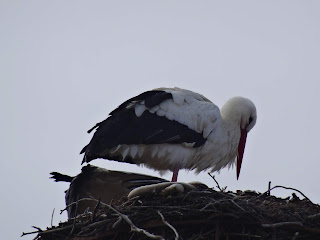
96. White Stork (Cigueña Blanca)

Fun fact about storks is that although they do not necessarily pair for life they are monogamous and loyal and tend to return to the same nests and partners.




95. Eurasian Blue Tit (Herrerillo Común) 

Non-migratory, easily recognisable, peculiar tit that is famous for clinging to the outer branches of trees and hanging upside down in search for food! Great rival of the Common Tit and very adaptable when it comes to accommodation!


94. Thekla's Lark (Conjugada Montesina)

Famous zoologist Alfred Brehm gave this bird the name of his deceased sister Thekla. The greek name Thekla comes from the ancient greek name Theokleia which means God's honor.

This beautiful bird breeds in all sub-Sahara across north Africa from Senegal to Somalia and in the Iberian Peninsula. It is a sedentary species.

Sunday, February 3, 2019

Casa de Campo

Started birding in Spain! First observations in Casa de Campo, Madrid. 

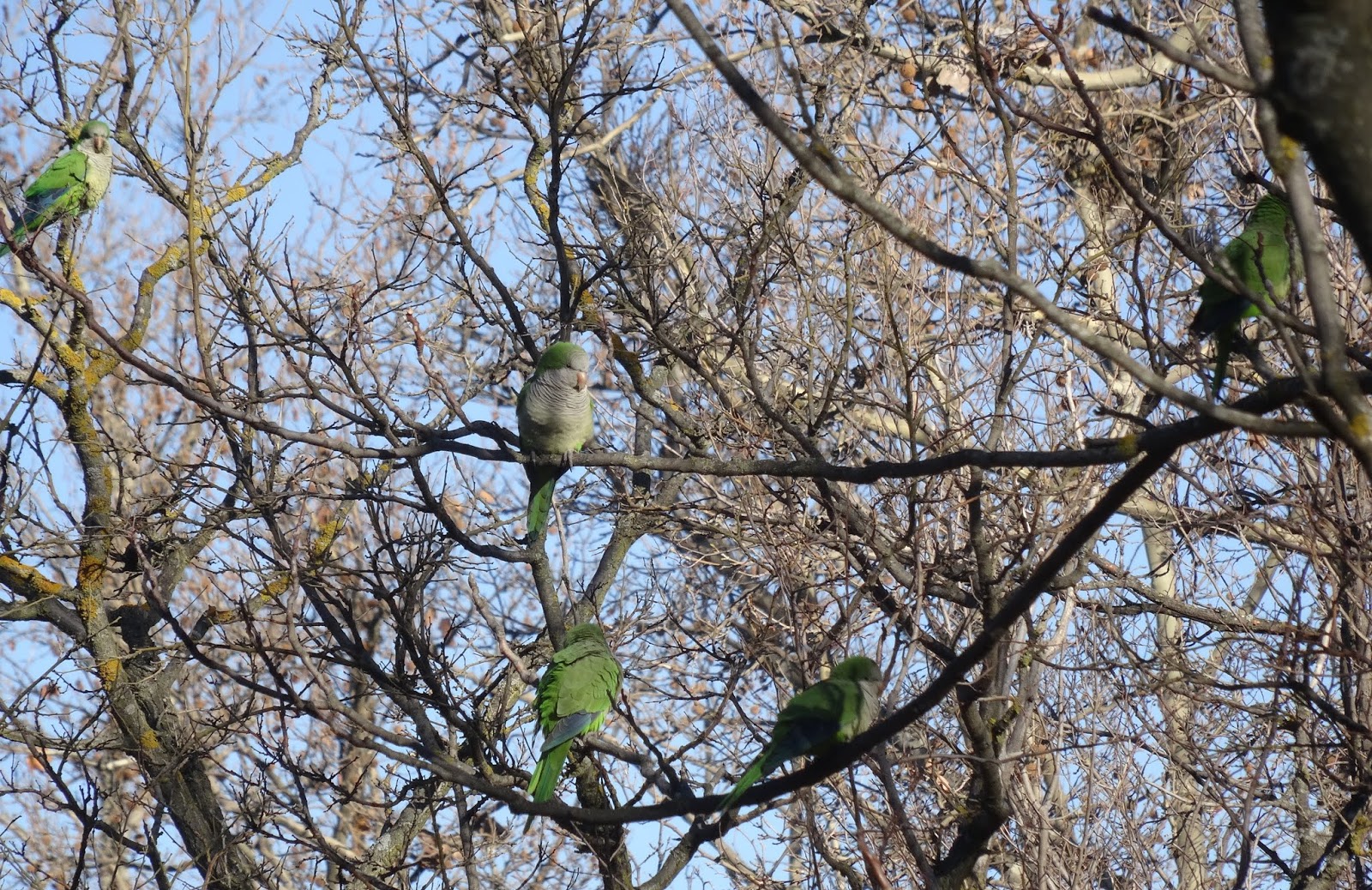
Apparently, Monk Parakeet is an invasive species from South America, that causes a problem to pigeons and sparrows, in the area, and less to magpies. For now, they all co-inhabit the area :) .

93.  Monk Parakeet (Quaker Parrot)


92. Common Wood Pigeon


Also, Eurasian Magpie


 Winter frost


February 2019

Wednesday, June 1, 2016

Heraklion region in the spring

91. Indian Peafowl (or Blue Peafowl)

The male is called a peacock and this particular is a male. 
Seen at the Palace of Knossos in Heraklion. It has lived there for a really long time. 


As you can see, the Prince of Lilies in this painting at the Palace is wearing the peacock's predecessors' feathers on his head. 


The "Blue Birds of Knossos" is also believed to be a painting of peacocks that dates back to the 1500BC.


90. Eurasian Collared Dove

Very common doves all around Greece. Their scientific name (Streptopelia decaocto) is said to come from their very distictive call which sounds like "deca-octo" which is the number 18 in latin. There is also a  greek myth behind their name.


Pictures: May-June 2016

Sunday, April 24, 2016

Zaros lake

89. Muscovy ducks

In the lively colors of Zaros lake.


And some domesticated ducks/geese.


Seen in Zaros, April 24th, 2016

Sunday, March 27, 2016

First grebe

88. Great crested grebe

First bird of the family of grebes on the list. I have one sighting and the photos clearly don't do it justice. They are beautiful birds with very special decorations and dances. The juveniles have black and white stripes on the head. They were nearly hunted to extinction in the UK.

Grebes in general are freshwater diving birds. They might have a close relationship to flamingos.

Seen in Como Lago, March 20th, 2016

Friday, March 25, 2016

Northern Italy (part 2)

87. European Robin
from a great distance. It is very small and the male and female are very similar. Here you can see the American Robin for comparison.

Seen in Citta alta, March 15th 2016

86. Mute swan
My first beautiful mute swans! In this post you can see the Whooped swan seen in Iceland and in the link below you can see the obvious difference of the two species, concerning their beaks.

http://www.arranbirding.co.uk/swans.html

Seen in Como lago, March 20th 2016

85. Eurasian coot

Black, except for its white frontal shield with very strong toes and red eyes.

Seen in Como lago, March 20th 2016

Northern Italy

84. Eurasian magpie (or Common magpie or Gazza ladra!)


It is one of the most intelligent birds. Quoting from wikipedia:
In Italian folklore, magpies are believed to have a penchant for picking up shiny items, particularly precious stones. Rossini's opera La gazza ladra and The Adventures of Tintin comic The Castafiore Emerald are based on this theme.
Seen in Novate Milanese, March 21st, 2016

83. Common Kestrel


It belongs in the same family as falcons and it is a bird of prey. It is small and the female is noticeably larger than the male. The male has blue-grey cap and tail. This one is either a juvenile or a female.

Seen in Citta alta, Bergamo, March 15th, 2016

82. Great black cormorant

It was nearly hunted to extinction in the past! Fishermen are sometimes able to take fish out of the cormorants' mouths since they catch it without being able to fully swallow them.

Seen in Como Lago, March 20th, 2016